
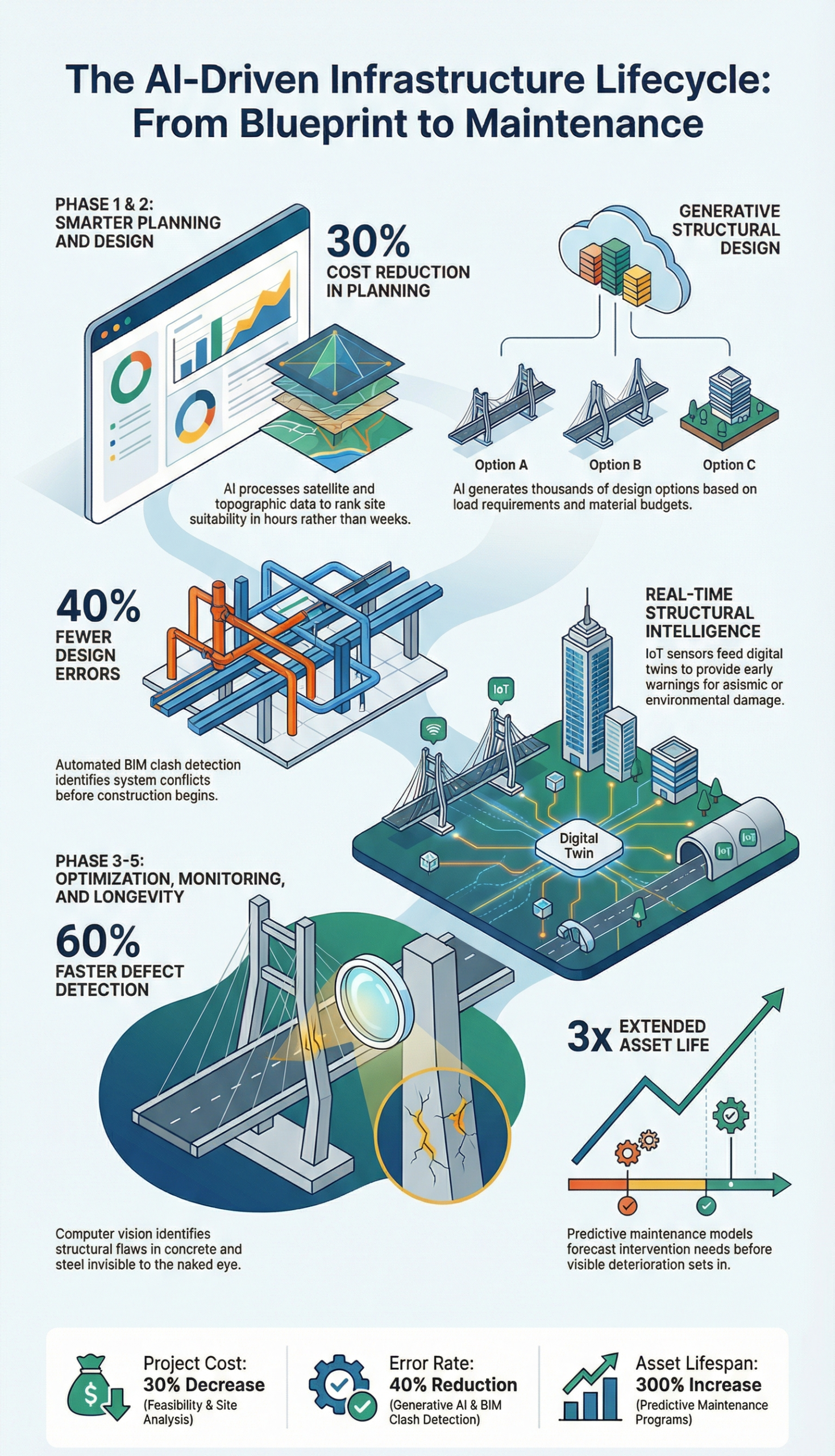
Artificial intelligence is fundamentally transforming the landscape of civil engineering by revolutionizing the way infrastructure projects are planned, constructed, and maintained over time. Throughout every stage of a civil engineering project—beginning with the initial feasibility study and extending through the decades-long maintenance phase—AI-driven tools and technologies are streamlining operations and providing numerous benefits.
During the feasibility study, AI algorithms analyze vast amounts of data to assess project viability, optimize resource allocation, and predict potential challenges. This proactive approach allows engineers to make informed decisions early on, minimizing risks and reducing costs associated with unexpected issues.
As the project progresses into the design and construction phases, AI tools enhance collaboration among teams, automate routine tasks, and detect errors in real-time. For instance, machine learning models can analyze blueprints and construction plans to identify discrepancies, reducing human error and ensuring compliance with safety regulations. Additionally, AI can optimize scheduling and logistics, leading to more efficient use of resources and timely project delivery.
In the long-term maintenance phase, AI technologies continue to play a crucial role by utilizing predictive analytics to monitor infrastructure performance. This allows for early identification of potential failures or maintenance needs, ultimately extending the lifespan of structures and reducing overall maintenance costs.
The integration of AI across all phases of civil engineering not only leads to smarter decision-making at scale but also fosters innovation and sustainability in infrastructure development. This comprehensive mapping of AI’s role in civil engineering highlights its significant impact and underscores the importance of embracing these advancements for future projects.