
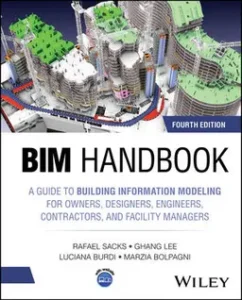
About the book
Comprehensive guide to the latest developments in Building Information Modeling (BIM).
Explains how BIM has evolved from basic 2D/3D modeling to advanced tools for simulation, analysis, and project management.
Covers the growing role of BIM in architecture, engineering, and construction industries.
Updated edition reflects modern BIM standards, workflows, and industry practices.
Provides insights into BIM integration across the entire project lifecycle.
Includes an expanded discussion on the owner’s perspective and BIM implementation.
Explains important industry frameworks such as ISO 19650 for BIM management.
Examines the connection between BIM and digital twins for construction, operations, and maintenance.
Serves as a practical reference for understanding innovation in construction technology.
Useful for architects, engineers, contractors, facility managers, building owners, and BIM software developers.
Contents
- Introduction
- Core BIM Enabling Technologies
- BIM Tools, Platforms, and Environments
- BIM for Owners and Facility Managers
- BIM for Architects and Engineers
- BIM for Contractors
- BIM for Subcontractors and Fabricators
- Facilitators of BIM Adoption and Implementation
- The Future: Building with BIM
- Discussion Questions
ISBN
- E-Book ISBN: 978-1-394-22223-0
- Hardcover ISBN: 978-1-394-22222-3
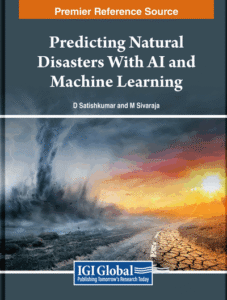
About the book
- Begins by explaining the nature of disasters, distinguishing between:
- Natural hazards
- Man-made hazards
- Examines Disaster Risk Reduction (DRR) and highlights the significant human contribution to many disasters.
- Promotes a comprehensive disaster management framework based on the four “R’s”:
- Risk Mitigation
- Response Readiness
- Response Execution
- Recovery
- Explores the application of Artificial Intelligence (AI) and Machine Learning (ML) in:
- Disaster prediction
- Impact management
- Disaster mitigation
- Natural Language Processing (NLP)
- Early warning systems
- Compares and analyzes:
- Weak AI (task-specific human intelligence simulation)
- Strong AI (autonomous problem-solving capability)
- Their relevance in disaster management
- Addresses key practical challenges, including:
- Real-world data handling
- Data accessibility and completeness
- Security and privacy concerns
- Ethical considerations
- Suitable for:
- Academics
- Public and private organizations
- Disaster management professionals and managers
- General readers interested in the field
- Encourages the adoption of AI and ML in disaster management due to growing urgency.
- Provides a comprehensive research overview and acts as a foundation for further studies, particularly for postgraduate students focusing on AI- and ML-driven disaster prediction and management.
- Begins by explaining the nature of disasters, distinguishing between:
Contents
- Unravelling Complications in Natural Disasters: A Comprehensive Exploration
- Reshaping Disaster Resilience: The AI and Machine Learning Revolution in Natural Catastrophe Management
- Navigating the Crescendo of Challenges in Harnessing Artificial Intelligence for Disaster Management
- The Impact of Social Media on Public Perception and Behaviour During Disasters: An AI-Enhanced Analysis
- Future Trends and Innovations in Natural Disaster Detection Using AI and ML
- Artificial Intelligence and IoT-Based Disaster Management System
- Prediction Analysis of Natural Disasters Using Machine Learning
- Predicting Tropical Cyclones: A Supervised Machine Learning Approach
- Futuristic Disaster Mitigation: The Role of GPUs and AI Accelerators
- IoT-Based Smart Sensors: The Key to Early Warning Systems and Rapid Response in Natural Disasters
- Automation of IOT Robotics
- Mitigating Disasters Below the Surface: A Comprehensive Study on Recent Advantages and Ongoing Challenges in Underwater Sensor Networks
- Unveiling Earth’s Rhythms: Deep Learning Techniques for Forecasting Seismic Cycle Locations
- A Comprehensive Machine Learning Approach for Accurate Forest Fire Forecasting
ISBN
- ISBN13: 9798369322802
- ISBN13 Softcover: 9798369347430
- EISBN13: 9798369322819
- DOI: https://doi.org/10.4018/979-8-3693-2280-2
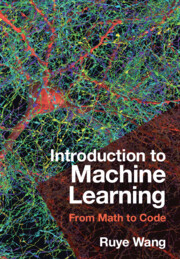
About the book
- Focuses on explaining how and why machine learning algorithms work.
- Bridges the gap between theoretical foundations and practical algorithmic/code-level implementation.
- Includes 85+ detailed worked examples in both Matlab and Python.
- Demonstrates step-by-step algorithm implementation and interpretation of results.
- Provides 75+ end-of-chapter problems for hands-on coding practice.
- Helps students develop their own implementations of machine learning algorithms.
- Shows how mathematical concepts are translated from equations to executable code (especially in Matlab).
- Offers strong mathematical foundations, including:
- Multivariable Calculus
- Linear Algebra
- Probability and Statistics
- Numerical Methods
- Optimization
- Supplemented with online resources such as:
- Instructor lecture slides
- Downloadable Python code
- Additional appendices
- Designed as a comprehensive introduction for senior undergraduate and graduate students in Engineering and Computer Science.
Contents
Part I – Mathematical Foundations
- Solving Equations
- Unconstrained Optimization
- Constrained Optimization
Part II – Regression
- Bias–Variance Tradeoff and Overfitting vs. Underfitting
- Linear Regression
- Nonlinear Regression
- Logistic and Softmax Regression
- Gaussian Process Regression and Classification
Part III – Feature Extraction
- Feature Selection
- Principal Component Analysis
- Variations of PCA
- Independent Component Analysis
Part IV – Classification
- Statistic Classification
- Support Vector Machine
- Clustering Analysis
- Hierarchical Classifiers
Part V – Neural Networks
- Biologically Inspired Networks
- Perceptron-Based Networks
- Competition-Based Networks
Part VI – Reinforcement Learning
- Introduction to Reinforcement Learning
Part VII – Large Language Models
- Large Language Models
ISBN
- ISBN: 9781009023870
- DOI: https://doi.org/10.1017/9781009023870
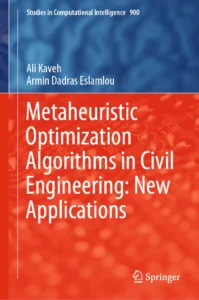
About the book
Discusses the application of metaheuristic algorithms to key optimization problems in civil engineering.
Highlights the growing need for greater accuracy, efficiency, and speed in analysis and design due to advancements in civil engineering technologies.
Explains the development of novel methods for the optimal design of complex, real-world systems with large numbers of elements.
Designed for scientists, engineers, and students interested in applying newly developed metaheuristics to practical problems.
Presents concepts applicable not only to civil engineering but also to mechanical, electrical, and industrial engineering optimization problems.
Serves as an essential resource for professionals using optimization methods in design and for students and researchers focused on structural optimization.
Contents
- Introduction
- Optimum Stacking Sequence Design of Composite Laminates for Maximum Buckling Load Capacity
- Optimum Design of Castellated Beams with Composite Action and Semi-rigid Connection
- Optimal Design of Steel Curved Roof Frames by Enhanced Vibrating Particles System Algorithm
- Geometry and Sizing Optimization of Steel Pitched Roof Frames
- Two-Stage Optimal Sensor Placement Using Graph-Theory and Evolutionary Algorithms
- The Charged System Search Algorithm for Adaptive Node Moving Refinement in Discrete Least-Squares Meshless Method
- Performance-Based Multi-objective Optimization of Large Steel Structures
- Optimal Seismic Design of Steel Plate Shear Walls Using CBO and ECBO Algorithms
- Colliding Bodies Optimization Algorithm for Structural Optimization of Offshore Wind Turbines with Frequency Constraints
- Colliding Bodies Optimization for Analysis and Design of Water Distribution Systems
- Optimization of Tower Crane Location and Material Quantity Between Supply and Demand Points
- Optimization of Building Components with Sustainability Aspects in BIM Environment
- Multi-objective Optimization of Construction Site Layout
- Multi-objective Electrical Energy Scheduling in Smart Homes Using Ant Lion Optimizer and Evidential Reasoning
ISBN
- Hardcover ISBN: 978-3-030-45472-2
- Softcover ISBN: 978-3-030-45475-3
- eBook ISBN: 978-3-030-45473-9
- DOI: https://doi.org/10.1007/978-3-030-45473-9
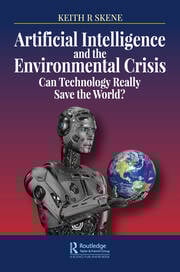
About the book
- Argues that artificial intelligence requires a new foundation, shifting from human-centric intelligence to ecological intelligence.
- Proposes that grounding AI within the Earth System is essential to achieve the promise of a better world.
- Emphasizes principles such as emergence, interconnectedness, and real-time feedback as core to future AI development.
- Suggests this shift could lead to a historic transformation — an age of re-integration.
- Identifies a critical weakness in current AI thinking that may hinder positive global transformation.
- Highlights systems theory as a necessary foundation for technologies aiming to improve society.
- Advocates for a radical, ecology-based rethinking of AI design and purpose.
- Explains why ecosystem intelligence, rather than human intelligence, provides a stronger framework for AI.
- Examines the potential positive impacts of this approach across society, the environment, and the economy.
- Discusses practical pathways for delivering this transformative shift.
Contents
- Should I Stay or Should I Go? Ethics in AI
- Choosing an ethical framework
- The strange case of Asimov’s laws
- Free will and moral judgement
- The confused Owl of Minerva: dangers of a moral vacuum
- Who’s in charge of the big bad wolf?
- What should a declaration of AI rights look like?
- Gender, Race, Culture and Fear
- Gender issues in AI
- Racial issues in AI
- Cultural issues in AI
- Fear and loathing in AI
- The Thinker: Human Intelligence
- Human intelligence: Carolus Linnaeus and his wise, wise men
- So what is human intelligence?
- Philosophy and intelligence: the framing of our thoughts
- Other Modes of Intelligence: Thinking Outside the Human Box
- Animal intelligence: Machiavellian sentience and the wisdom of the swarm
- Plant intelligence: headless, brainless, dispersed intelligence
- Microbial intelligence: gene-swapping revelry in the quorum
- Ecosystem intelligence: systems thinking in the cathedral of thought
- Systems are non-linear
- Systems are emergent
- Systems are sub-optimal
- Systems rely of real-time feedback
- Highway to Hell: The Existentialist Threat Facing Humankind
- A brief history of our path towards destruction
- The five clear road signs that point towards criticality
- Why ecological damage matters to us
- Adam Smith and his invisible hand
- Kuznets and his curve: how ninety five percent speculation led us badly astray
- Forget the Romans. What has AI ever done for us?
- AI and economics: the best of things or the worst of things?
- AI and society
- AI and the environment
- Technology and sustainability: bellicose bedfellows or Romeo and Juliet?
- Imagining a New World
- The swallow whose nest was stolen: a salutary tale
- Blinded by the bling: dashboard dogs and a disappearing sea
- What needs changed and what change do we need?
- The chains that bind: taking responsibility for our footprints
- The Ogiek people and the new, improved invisible hand
- Lessons from the edge of the world: The St Kildan legacy
- The Garden of Eden complex: how not to fix the world
- The three cornerstones: diversity, resilience and integration
- The central role of AI in feedback: shaping our new world
- Barriers to Change
- The five philosophical barriers
- Structural barriers to change
- The seven dragons: psychological barriers
- How AI can help overcome these barriers
- Transition
- The nature of transition
- Studies in transition
- Why societal change is key
- How to manage societal change
- Requiem for the King of Phrygia
ISBN
- Paperback ISBN: 9780367436544
- Hardback ISBN: 9780367152000
- eBook ISBN: 9780429055676
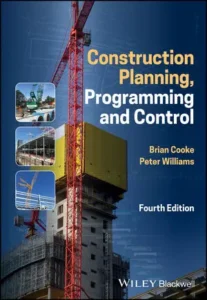
About the book
Construction management is a complex, multi-faceted discipline focused on delivering projects that meet client objectives while balancing the commercial interests of designers, consultants, and contractors.
Requires maintaining high quality standards, strict safety compliance, and adherence to time and budget constraints.
Provides an authoritative, accessible, and comprehensive foundation for understanding core construction management principles.
Construction Planning, Programming and Control has been a trusted resource since 1998, known for its practical approach to project management.
Covers key principles and practices of project time and cost control.
Places construction management within the broader challenges facing the modern construction industry.
Explains complex concepts in a clear, practical, and easy-to-understand manner.
Includes detailed coverage of:
Procurement, contracts, supply chain, and risk management
Health and safety management (including CDM 2015)
Major contract forms: JCT 2016, NEC4, ICC, and FIDIC
Method statements and safe systems of work
Features three major case studies, including an in-depth analysis of HS2.
Fully updated with insights on:
Modern Methods of Construction (MMC)
Building Information Modelling (BIM)
Latest planning and cost management software
An invaluable reference for students and professionals in construction management, civil engineering, quantity surveying, and related fields.
Contents
- Construction Projects
- Project Environment
- Project Risk
- Managing Construction Projects
- Modern Methods of Construction
- Procurement and Contracts
- Estimating and Bidding
- The Planning Process
- Scheduling Techniques
- Construction Sequences
- Method Statements
- Planning for Safety
- Planning the Project
- Planning Cash Flow
- Project Control
- Controlling Time
- Controlling Money
- Controlling Resources
- Hotel and Commercial Centre
- Motorway Bridge Replacement
- High Speed
ISBN
- ISBN (e-Book): 978-1-119-10947-1
- ISBN (Hard Book): 978-1-119-10945-7
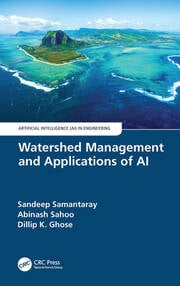
About the book
- Highlights land use and water resources as critical environmental issues requiring effective conservation, management, and maintenance practices.
- Emphasizes the role of engineering techniques in addressing challenges related to flood control, soil conservation, rainfall–runoff processes, and groundwater hydrology.
- Provides foundational hydrological principles to support practical strategies for watershed planning, design, and management.
- Introduces modern approaches, including machine learning and neural networks for runoff prediction.
- Explores the use of artificial intelligence for forecasting groundwater fluctuations.
- Covers hydrologic analysis and design integrated with soil conservation through proper watershed management techniques.
- Analyzes land erosion and sediment transport across watersheds of varying scales.
- Presents systematic methodologies for runoff estimation.
- Discusses water harvesting and the development of water-yield catchments.
- Serves as a valuable resource for students, environmental consultants, water resource engineers, and researchers in water science and engineering.
Contents
- Introduction to Watershed Management
- Characteristics of Watershed
- Soil Erosion and Its Control
- Water Harvesting
- Water Quality Management in Watershed
- Groundwater
- Flood and Drought
- Sediment Sampling and Transport
- Runoff
- Application of Artificial Intelligence for Prediction of Ground Water Fluctuation
- Prediction of Flood Using Hybrid ANFIS-FFA Approaches in Barak River Basin
- Prophecy of Sediment Load Using Hybrid AI Approaches at Various Gauge Station in Mahanadi River Basin, India
- Scheming of Runoff Using Hybrid ANFIS for a Watershed: Western Odisha, India
- Application of Hybrid Neural Network Techniques for Drought Forecasting
ISBN
- eBook ISBN: 9781003168041
- DOI: https://doi.org/10.1201/9781003168041
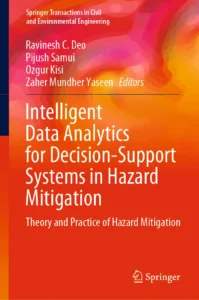
About the book
- Showcases cutting-edge applications of machine learning techniques in disaster management.
- Focuses on monitoring, analyzing, and forecasting hydro-meteorological variables.
- Highlights predictive modeling as a key discipline for early warning and natural hazard forecasting.
- Integrates expertise from diverse fields including numerical weather forecasting, meteorology, hydrology, engineering, agriculture, economics, and disaster policy-making.
- Promotes an interdisciplinary framework for developing robust hazard risk mitigation models.
- Advances the application of artificial intelligence in decision-support systems for disaster management and policy formulation.
- Serves as a valuable reference for graduate students, academics, scientists, and professionals in disaster management, AI, and environmental sciences.
Contents
- Drought Index Prediction Using Data Intelligent Analytic Models: A Review
- Bayesian Markov Chain Monte Carlo-Based Copulas: Factoring the Role of Large-Scale Climate Indices in Monthly Flood Prediction
- Gaussian Naïve Bayes Classification Algorithm for Drought and Flood Risk Reduction
- Hydrological Drought Investigation Using Streamflow Drought Index
- Intelligent Data Analytics Approaches for Predicting Dissolved Oxygen Concentration in River: Extremely Randomized Tree Versus Random Forest, MLPNN and MLR
- Evolving Connectionist Systems Versus Neuro-Fuzzy System for Estimating Total Dissolved Gas at Forebay and Tailwater of Dams Reservoirs
- Modulation of Tropical Cyclone Genesis by Madden–Julian Oscillation in the Southern Hemisphere
- Intelligent Data Analytics for Time Series, Trend Analysis and Drought Indices Comparison
- Conjunction Model Design for Intermittent Streamflow Forecasts: Extreme Learning Machine with Discrete Wavelet Transform
- Systematic Integration of Artificial Intelligence Toward Evaluating Response of Materials and Structures in Extreme Conditions
- Machine Learning to Derive Unified Material Models for Steel Under Fire Conditions
- Energy Dissipation in Rough Chute: Experimental Approach Versus Artificial Intelligence Modeling
- Morphological Changes of Floodplain Reach of Jhelum River, India, from 1984 to 2018
- Spatial Modeling of Soil Erosion Susceptibility with Support Vector Machine
- Spatial Prediction of Landslide Susceptibility Using Random Forest Algorithm
- Artificial Neural Networks for Prediction of Steadman Heat Index
- Daily Flood Forecasts with Intelligent Data Analytic Models: Multivariate Empirical Mode Decomposition-Based Modeling Methods
- Machine Learning Method in Prediction Streamflow Considering Periodicity Component
- Empirical Model for the Assessment of Climate Change Impacts on Spatial Pattern of Water Availability in Nigeria
ISBN
- Hardcover ISBN: 978-981-15-5771-2
- Softcover ISBN: 978-981-15-5774-3
- eBook ISBN: 978-981-15-5772-9
- DOI: https://doi.org/10.1007/978-981-15-5772-9
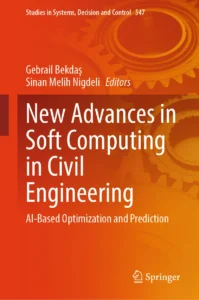
About the book
- Emphasizes the crucial role of soft computing applications in civil engineering design.
- Highlights the need to balance safety, aesthetics, cost-efficiency, and environmental considerations in engineering projects.
- Explains the value of advanced optimization techniques for complex systems involving multi-constraint, multi-objective, and control problems requiring iterative differential equation solutions.
- Describes the inspiration behind metaheuristic algorithms, which draw from natural processes to solve optimization challenges.
- Notes that combining features of different AI-based algorithms can enhance precision, computational efficiency, and convergence speed.
- Presents the book as a timely resource summarizing recent advancements in civil engineering optimization.
- Covers both traditional metaheuristic approaches and emerging trends integrating artificial intelligence and machine learning for predicting optimal solutions.
- Aims to streamline lengthy optimization processes through intelligent computational methods.
- Includes chapters addressing diverse civil engineering applications, from fundamental concepts to advanced adaptations.
- Designed as a comprehensive academic resource for undergraduate and graduate engineering students.
- Intended to serve as a reference text for university courses across various civil engineering disciplines.
- Edited by experts who will contribute to most chapters, potentially incorporating recent research projects and postgraduate theses based on availability of high-quality work.
Contents
- Introduction to Data Analysis and Machine Learning Applications in Civil Engineering
- Application of Artificial Intelligence (AI) in Civil Engineering
- Machine Learning Applications in Structural Engineering
- A Multi-objective Optimal Design Process for Determination of Link Capacity Expansions
- IoT with Deep Learning in Pipeline and Metro Track Risk Estimation Using Smart Cities Development
- Forecasting of Lake Level by Soft Computing Approaches
- Artificial Intelligence-Driven Structural Health Monitoring: Challenges, Progress, and Applications
- Optimizing Tuned Mass Damper by Examining Displacement Ratios with and Without TMD System
- Evaluation of Predictive Models for Mechanical Properties of Earth-Based Composites for Sustainable Building Applications
- Shear Wall Cost Optimization by Employing Harmony Search
- Effect of CatBoost Parameters on Cost Minimization of Rectangular Section Reinforced Concrete Columns Under Uniaxial Bending Effect
- Machine Learning Approaches for Predicting Compressive and Shear Strength of EB FRP-Reinforced Concrete Elements: A Comprehensive Review
- A Modified Jaya Algorithm for Optimum Design of Carbon Fiber-Reinforced Polymers
- Prediction of Bi-Linear Strength Envelope of Brazilian Soils Using Machine Learning Techniques
- Assessment of Unconfined Compressive Strength of Stabilized Soil Using Artificial Intelligence Tools: A Scientometrics Review
- A Review of Deformations Prediction for Oil and Gas Pipelines Using Machine and Deep Learning
- Determination of the Effect of XGBoost’s Parameters on a Structural Problem
- Area Optimization of Bending Members with Different Shapes in Terms of Pure Bending
- A Simplified Flower Pollination Algorithm for Structural Optimization of Trusses
ISBN
- Hardcover ISBN: 978-3-031-65975-1
- Softcover ISBN: 978-3-031-65978-2
- eBook ISBN: 978-3-031-65976-8
- DOI: https://doi.org/10.1007/978-3-031-65976-8
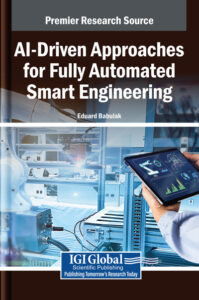
About the book
- Highlights how artificial intelligence (AI) is transforming civil engineering through massive data streams and advanced computing techniques.
- Provides a comprehensive review of key AI technologies, including machine learning, deep learning, natural language processing, computer vision, robotics, and generative AI.
- Examines applications of AI across multiple civil engineering domains such as design, construction, monitoring, transportation, geotechnical, environmental, and asset management.
- Explores how AI-driven models improve sustainability, safety, and operational efficiency.
- Addresses critical challenges including data limitations, model interpretability, and ethical concerns.
- Emphasizes the increasing demand for AI-related skills within the civil engineering workforce.
- Discusses emerging trends such as digital twins, smart cities, and quantum computing.
- Identifies research gaps and future opportunities by synthesizing recent advancements in the field.
Contents
- Ultra Smart Cyberspace Manufacturing Infrastructure Using Artificial Intelligence-Driven Automated Engineering
- Human-Centric AI Tools Into Agile Methodologies for Optimized Software Development
- AI-Driven Automation in Agile Software Development Teams Enhancing Efficiency and Collaboration
- Artificial Intelligence in Civil Engineering: Novel Prospects to Explore
- AI-Driven Optimization Techniques for Energy-Efficient Building Systems
- AI in Computer Vision
- Ultra Smart Engineering and Manufacturing Impact
- A Hand Gesture Recognition Model Using Deep Learning Algorithms
- Deepfake Face Detection System for Differentiating Real and Authentic Images
- Exhaustive Survey on Automated ASD Diagnosis Integrating Behavioural and Neuroimaging Data
- Reinforcement Learning for Autonomous Optimization in Intelligent Engineering
- Robotics in Financial Management: Pioneering Sustainability Through Intelligent Automation
- Technology-Driven Smart Engineering and Smart Manufacturing
ISBN
- DOI: https://doi.org/10.4018/979-8-3373-4839-1.ch004
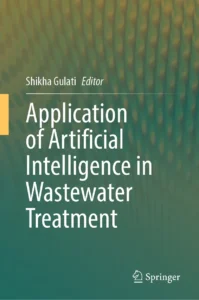
About the book
- Provides a comprehensive overview of integrating artificial intelligence (AI) techniques into wastewater treatment processes.
- Covers applications such as AI-driven monitoring and control systems in treatment plants.
- Explores predictive modeling approaches for improved pollutant removal.
- Discusses the development of smart sensor networks for real-time data analysis.
- Demonstrates how combining AI methodologies with wastewater treatment enhances operational efficiency.
- Highlights the potential for cost reduction and minimization of environmental impacts.
- Addresses the urgent need for sustainable and efficient wastewater management solutions.
- Explains how machine learning and data analytics enable proactive decision-making and optimized resource allocation.
- Emphasizes AI’s capability to predict system failures and improve reliability.
- Contributes to the broader objective of environmentally sustainable and economically viable wastewater treatment practices.
Contents
- Introduction
- Overview of Applications of Artificial Intelligence (AI) in Diverse Fields
- Artificial Intelligence in Wastewater Treatment
- Potential of AI Optimization in Wastewater Treatment Processes
- Real-Time Data Analysis with Smart Sensors
- Automated Water Control System in Wastewater Treatment Plants
- Predictive Modeling for Pollutant Removal: Machine Learning Algorithms for Predictive Analysis
- Case Studies and Success Stories of AI Implementation in Wastewater Treatment
- Environmental Sustainability, Compliance and Life Cycle Assessment of AI-Integrated Systems
- Emerging AI Technologies in Wastewater Treatment
- Regulatory Framework and Standards for Adapting AI Systems: Interplay Between AI and Environmental Policies
- Recommendations for Implementation of AI: Steps Toward Industry-Wide Adoption
- Conclusions and Future Prospects of AI in Wastewater Treatment
ISBN
- Hardcover ISBN: 978-3-031-69432-5
- Softcover ISBN: 978-3-031-69435-6
- eBook ISBN: 978-3-031-69433-2
- DOI:https://doi.org/10.1007/978-3-031-69433-2
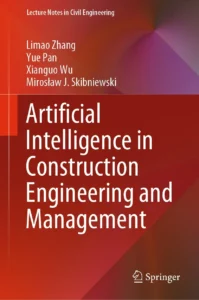
About the book
- Highlights the latest Artificial Intelligence (AI) technologies and applications in construction engineering and management.
- Notes that the construction industry has been relatively slow in adopting digital technologies, traditionally relying on professional expertise and experience.
- Explains how AI combines large datasets, rapid iterative processing, and intelligent algorithms such as neural networks, process mining, and deep learning.
- Describes AI’s ability to learn automatically from patterns and features within data.
- Provides solutions for key construction challenges, including knowledge discovery, risk estimation, root cause analysis, damage prediction, and defect detection.
- Emphasizes the significant transformation driven by emerging AI applications in recent years.
- Demonstrates how AI enhances project efficiency and safety.
- Highlights improvements in automation, productivity, and global competitiveness within the construction sector.
Contents
- Introduction to Artificial Intelligence
- Knowledge Representation and Discovery
- Fuzzy Modeling and Reasoning
- Time Series Prediction
- Information Fusion
- Dynamic Bayesian Networks
- Process Mining
- Agent-Based Simulation
- Expert Systems
- Computer Vision
- Conclusions and Future Directions
ISBN
- Hardcover ISBN: 978-981-16-2841-2
- Softcover ISBN: 978-981-16-2844-3
- eBook ISBN:978-981-16-2842-9
- DOI: https://doi.org/10.1007/978-981-16-2842-9